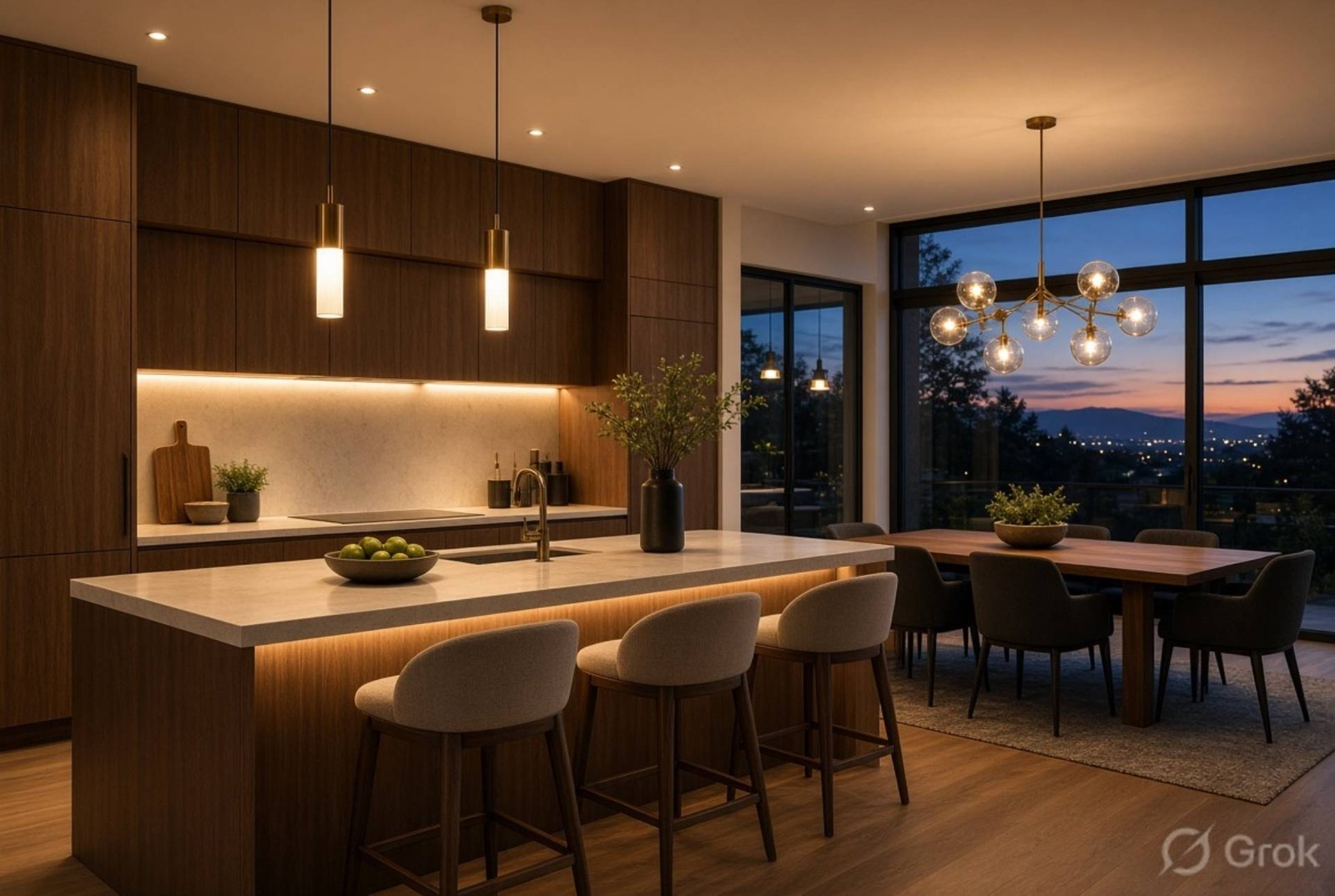
Lighting does more than let you see where you’re going. It shapes how a room feels, how colours appear, and even how you use the space day to day. The right light can make a small room feel larger, a dull corner inviting, and an ordinary evening somehow special. Poor lighting does the opposite—it flattens everything and leaves spaces feeling unfinished.
Good lighting is one of the most effective, affordable ways to refresh a home without major renovations. You don’t need to start from scratch. Small, thoughtful changes often deliver the biggest shifts in atmosphere and function.
Why Lighting Matters More Than You Think
Light affects mood, focus, and even how we perceive size and cleanliness. A brightly lit kitchen feels energetic and practical. Soft, warm light in a living room encourages people to linger. Harsh overhead glare can make the same rooms feel cold or tiring.
Natural light is ideal when you can get it. South-facing windows, light-coloured walls, and carefully placed mirrors help bounce daylight deeper into a home. When daylight fades, artificial lighting takes over. The goal is to create a balance that works from morning to night.
Layering Light for Depth and Flexibility
One of the simplest ways to transform a room is to stop relying on a single ceiling fixture. Layered lighting combines three types:
- Ambient lighting provides overall illumination
- Task lighting focuses on specific activities such as reading or cooking
- Accent lighting highlights features like artwork, plants, or architectural details
When these layers work together, a room gains depth and you gain control. Dimmer switches make the difference even more noticeable. You can shift from bright and practical during the day to soft and relaxed in the evening with a simple adjustment.
Choosing Fixtures That Suit Your Style and Needs
Fixtures themselves become part of the interior design. A statement pendant over a dining table draws the eye and sets the tone. Wall sconces free up floor space and create a soft glow. Floor and table lamps add warmth and can be moved as needs change.
Scale matters. An oversized pendant can overwhelm a small entryway, while tiny lamps disappear in a large living room. Consider the height of your ceilings and the proportions of the furniture nearby. Materials and finishes should complement the rest of the room—brass and glass for a refined look, matte black or wood for something more contemporary, woven shades for texture and softness.
Colour Temperature and Its Effect on Mood
Not all white light is the same. Colour temperature, measured in kelvins, changes how a space feels.
Warm light (around 2700–3000K) creates a cosy, inviting atmosphere suited to living rooms, bedrooms, and dining areas. Cooler light (4000K and above) feels more alert and works well in kitchens, bathrooms, and home offices where clarity matters.
Many modern bulbs and LED fittings allow you to adjust temperature throughout the day. Starting with warmer light in the morning and evening, then shifting cooler during focused work hours, can support your natural rhythm without any complicated setup.
Practical Ideas for Key Rooms
In the living room, combine a central pendant or flush mount with floor lamps beside seating and accent lights that wash walls or shelves. This mix prevents dark corners and makes the space usable at any hour.
Kitchens benefit from strong task lighting under cabinets and over worktops, paired with softer ambient light from pendants or recessed spots. Avoid shadows on counters by placing light sources carefully.
Bedrooms need flexibility. Soft overhead light or wall lights for general use, plus bedside reading lamps that don’t disturb a partner. Warm tones help the room feel restful.
Bathrooms work best with even, shadow-free light around the mirror and a warmer option for evening baths. Moisture-rated fixtures are essential for safety and longevity.
Hallways and staircases often get overlooked. Consistent lighting along the route improves safety and makes the whole home feel more connected.
Common Lighting Mistakes to Avoid
Relying solely on overhead lights leaves rooms flat and uninviting. Choosing bulbs that are too bright or too cool for the space can create glare and discomfort. Ignoring dimmers limits your options as the day changes. Placing task lights in the wrong position—behind you instead of in front—casts shadows exactly where you need clarity.
Taking a few minutes to test different combinations before committing usually prevents these issues.
Frequently Asked Questions
How much should I spend on lighting for a noticeable difference?
You can achieve clear improvements with a modest budget. Good LED bulbs, a couple of well-chosen lamps, and dimmer switches often transform a room without expensive fixtures.
Is LED lighting really better for home interiors?
Yes. Modern LEDs use less energy, last longer, produce less heat, and come in a wide range of colour temperatures and styles. Quality has improved dramatically, so the light feels natural rather than harsh.
Can lighting make a small room feel larger?
It can. Even illumination, light colours, and strategically placed mirrors that reflect both natural and artificial light all help open up compact spaces. Avoid heavy dark shades that absorb light.
Should every room have the same colour temperature?
Not necessarily. Matching light to the room’s purpose usually works better—warmer in social and rest areas, cooler where focus and detail matter.
Conclusion
Lighting is one of the most powerful tools available for shaping how your home looks and feels. By combining natural light with thoughtful layers of ambient, task, and accent sources, choosing fixtures that suit both style and function, and paying attention to colour temperature, you can create interiors that feel more welcoming, practical, and personal. The changes do not need to be dramatic or expensive. Small, intentional adjustments often produce the most satisfying results and keep a home feeling fresh for years.